IEMs are widely praised as “a good alternative to gaming headsets”, since they take up less space, are comfortable for long sessions, and avoid the dreaded “headphone dent” on your head.
In this guide I’ll share nine top best iems for gaming and streaming on PC, PS5, Xbox, Switch or mobile. I focused on features that matter to gamers: low latency, accurate positional audio, microphone quality (for chat/streaming), comfort, and battery life (for wireless models). I also looked at platform support (PS5/PC compatibility, whether they use dongles or Bluetooth), and real-world usage notes.
In short, I combined my own experience (I’m an avid gamer) with the latest reviews and user feedback to find the ultimate in-ear gaming buds.
What to Look for in Gaming IEMs:
When I switched from my traditional headset to IEMs, I quickly noticed some important factors that make or break the experience. Here are the most critical things I considered:
- Latency: Wireless IEMs should have low-latency modes (often via a 2.4GHz USB dongle) so your sound (especially gunshots or footsteps) isn’t delayed. Any lag can ruin gameplay or audio-sync in streaming.
- Connectivity: Check compatibility with your platform. Some buds support both Bluetooth and 2.4GHz, so they can work on PS5/PC with minimal lag.
- Audio Tuning: Gaming often needs punchy bass (explosions, engine roars) and clear mids/highs (footsteps, dialogue). Many gaming IEMs have a “V-shaped” sound profile that accentuates bass and treble. I favored earbuds that still preserve vocal clarity (since I stream/talk a lot).
- Microphone: If you stream or play online, microphone quality is key. Some IEMs have a detachable boom mic, or a built-in mic. We’ll note mic performance for each, some IEMs prioritize sound and expect you to use a separate mic, while others include a surprisingly good in-line boom.
- Fit and Comfort: A snug, comfortable fit is non-negotiable. Ill-fitting earbuds can be painful or fall out during intense play. Some high-end buds even let you mold tips to your ear canal for a custom fit.
- Build Quality and Extras: Sturdy cables (for wired models), water/sweat resistance (for gaming on the go), and extras like app support or ANC are bonuses I checked out.
With all that in mind, let’s dive into the reviews. Each section below describes my experience with the product, highlights what I liked (often confirmed by reviews or specs), and a practical “what to consider” caveat so you can decide if it’s right for you.
Our Top 3 Recommendations
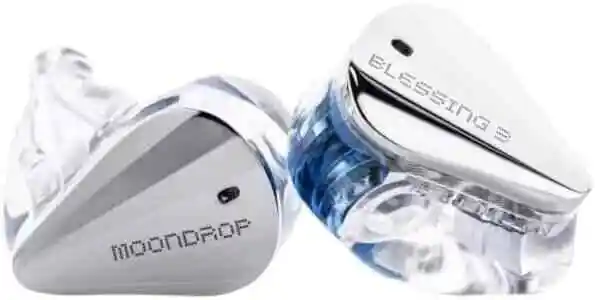 Moondrop Blessing 3
Accurate, balanced sound.
Low Latency.
Tight, detailed bass and crisp highs.
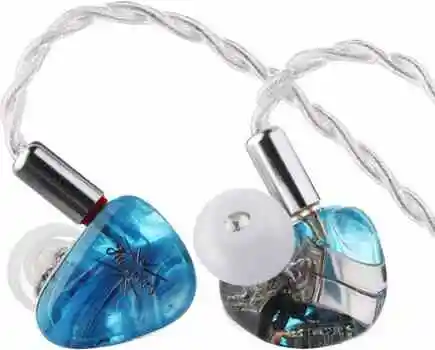 Kiwi Ears Orchestra Lite
Exceptionally clear midrange and treble.
Layered sound.
A well-balanced sound, perfect for critical listening.
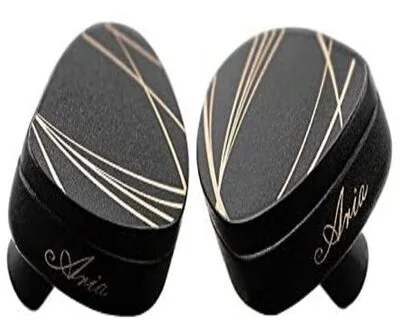 Moondrop Aria 2
Sound is spacious and musical.
Clear detail and an extended balanced bass.
Solid build with removable 2-pin cable.
8 Best In Ear Monitors for Gaming 2026
Moondrop Blessing 3
For Higher End Games
REASONS TO BUY
✓ Accurate, balanced sound.
✓ Low Latency.
✓ Tight, detailed bass and crisp highs.
✓ Solid metal build and comfortable over-ear fit.
✓ Ultra-low distortion
REASONS TO AVOID
✗ Highly Expensive.
It’s well known in audio circles and even used by some FPS pros. In use, the Blessing 3 impresses with its unique hybrid driver design. It has two dynamic drivers (one in each earpiece) plus four balanced-armature drivers, a setup Moondrop calls “H.O.D.D.U.S.”. In practice that means punchy, detailed bass from the dynamic drivers and clear, extended highs from the armatures. The result is a very natural, balanced sound.
In gaming, the Blessing 3’s neutral tuning really shines. The bass is firm without being overdone, and the mids (like footsteps or dialogue) are very natural, no big “mid hump.” The treble is clear but not piercing.
when I played a tense stealth mission, soft sounds stayed crisp and “alive,” which I appreciated. I will say it is tuned more for accuracy than booming impact; if you love chest-thumping bass or a hyped sound, you might need to adjust your expectations. These IEMs also handle high volume without distortion, so you don’t need a huge amp to drive them.
Kiwi Ears Orchestra Lite
Best Mid-Range
REASONS TO BUY
✓ Exceptionally clear midrange and treble.
✓ Layered sound.
✓ A well-balanced sound, perfect for critical listening.
✓ High-quality Built.
REASONS TO AVOID
✗ Some users may feel more occlusion (pressure in the ear) because of design.
Kiwi Ears Orchestra Lite, a newer hybrid IEM known for its musical sound. It features eight balanced-armature drivers (no dynamic drivers here), including dedicated ultra-tweeters and “subwoofer” drivers. Kiwi tuned it for a studio-monitor-like sound, focusing on natural clarity and detail.
In my experience, this made the Orchestra Lite sound exceptionally smooth and open. Mids and treble (like gunshots or voice chat) were nicely layered and forward, without harsh peaks. Low frequencies were still present and punchy, but they felt slightly lighter compared to the Blessing 3’s dynamic bass. The overall tone emphasizes a musical midrange, I could clearly hear instruments in background game tracks and subtle environmental sounds, which helped me catch in-game cues.
One thing I noticed is the Orchestra Lite’s build and fit. The shells are a bit chunky (the nozzle is 6mm, which is thicker than usual), so they don’t “disappear” in your ear. There is a feeling of occlusion (pressure) at first, but with the right tips they actually became comfortable to wear for hours. For PS5 or PC gaming, this IEM gave me an immersive, concert-hall feeling – my games’ soundtracks and effects had nice detail.
Moondrop Aria 2
Best Budget
REASONS TO BUY
✓ Sound is spacious and musical.
✓ Clear detail and an extended balanced bass.
✓ Solid build with removable 2-pin cable.
REASONS TO AVOID
✗ Metal housing makes the Aria 2 a bit heavier than average.
The Moondrop Aria 2 is another hybrid IEM, this time a 7mm dynamic driver inside rugged zinc-alloy housings. In practice, the Aria 2 sounds rich and almost neutral. I found its bass to be well-extended (more punch than the Orchestra Lite) and the upper frequencies smooth, it emphasizes musicality. It really shines on devices with high-quality outputs. In fact, it comes with both a 3.5mm plug and a 4.4mm balanced plug, making it incredibly versatile.
I plugged it into a balanced-output portable DAC, and the sound became even more spacious and clear. The Aria 2 is fairly efficient too (33Ω impedance, 122dB sensitivity), so I didn’t need any amp to hit loud volumes, Even with a simple USB-C dongle or console headphone jack, it drove easily to competitive levels.
In gaming, the Aria 2’s performance was very pleasing to me. The tuning is fairly balanced, meaning gunshots didn’t overwhelm voice lines, and I could follow music cues in games easily. I found the Aria 2 to be among the top IEMs in its class for overall sound quality.
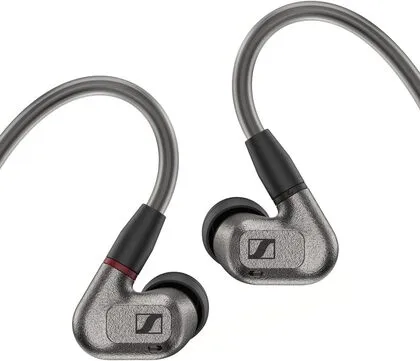
Sennheiser IE 600
Top Best
REASONS TO BUY
✓ Ultra-clear, neutral sound that reveals detail.
✓ “exceptionally versatile” sound.
✓ Well-built and highly comfortable.
REASONS TO AVOID
✗ Highly Expensive.
Moving up in price and prestige, I tested the Sennheiser IE 600, a studio-grade IEM. The IE 600 is all about clarity and neutrality. It uses a single 7mm “TrueResponse” dynamic driver in each side, built with a special amorphous metal housing for minimal distortion.
In practice, that means it has a very accurate, punchy bass (more so than most multi-BA IEMs) and a smooth, detailed midrange. The big story is detail retrieval: Sennheiser’s “Dual-Chamber Absorber” (D2CA) technology ensures even soft sounds are clear.
In my experience, subtle footsteps, distant voices, and tiny environmental sounds came through very clearly, nothing was masked by louder explosions. The IE 600’s tuning is neutral with a touch of warmth, so nothing is over-emphasized.
I didn’t feel any harsh peaks; instead, everything sounded very balanced and natural. It’s the kind of IEM where you can listen a long time without fatigue. If you play on PS5 or PC and want studio-quality clarity, this could be your pick, it’s essentially a reference monitor.
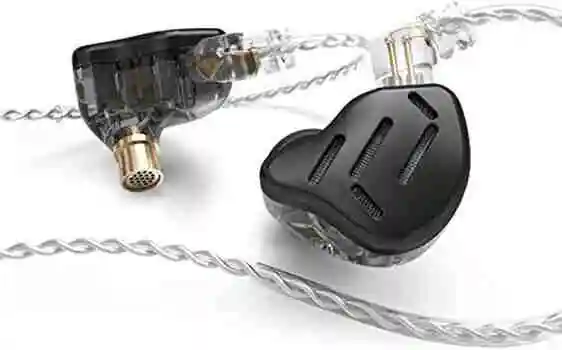
Linsoul KZ ZAX
Low Budget
REASONS TO BUY
✓ Very detailed and punchy sound for the price.
✓ Strong bass and clear mids.
✓ Ergonomic shell is light and comfortable.
REASONS TO AVOID
✗ Lack of treble extension.
For a budget-conscious competitive player, I looked at the KZ ZAX. This Chinese-made IEM is a 1 dynamic + 7 balanced-armature hybrid. In person, its sound is surprisingly aggressive. The low end is punchy and prominent, thanks to the 10mm dynamic driver handling the bass. The mids and highs are driven by a swarm of armatures, so vocals and effects come through with good clarity.
I found the ZAX’s tuning a bit on the bright side – it emphasizes attack and detail. For example, gunshots have a quick snap and dialogues cut through well, but very deep bass notes (like distant thunder) aren’t as rich as in pricier IEMs. On the bright side, it reveals a lot of detail for the price. One reviewer said it “reveals a lot of detail, and I liked the punchiness of the bottom end… quite an aggressive presentation”. I can vouch for that: it’s energetic and fun for fast games, but not fatiguing.
Build quality is okay for the cost. The ZAX has a zinc faceplate and resin shell – it looks metal but is quite light. It comes with a 2-pin cable, but the stock cable is notoriously poor (a common KZ issue). The nozzles are metal with a little lip to keep tips on, which I appreciated because my tips never popped off mid-game.
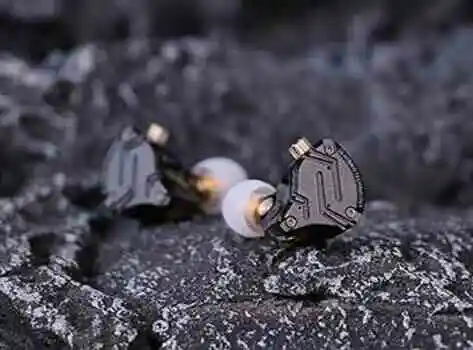
Linsoul KZ ZS10 Pro
Low Budget
REASONS TO BUY
✓ Exceptional sound quality featuring a balanced signature.
✓ Clear highs, usable bass.
✓ Excellent value for low price.
✓ 5 drivers and surprisingly detailed sound.
✓ Replaceable cable and metal faceplate add durability.
REASONS TO AVOID
✗ Bass quality could be improved.
Another KZ model, the ZS10 Pro, has been a long-time budget favorite. It packs four balanced-armature drivers plus one dynamic driver (1DD+4BA) per side. In use, its sound is fairly balanced but a bit bright. The 1DD handles bass and mids, while the BAs add detail and treble sparkle. I noticed its signature had lively highs, which makes small sounds like rustling leaves or distant voices more audible. Bass is decent and better than older KZ models (thanks to that dynamic driver), though again it’s not overwhelming.
I can confirm: for the price range, it sounds very good. It won’t beat high-end IEMs in nuance, but it provides solid positional audio for casual play.
The ZS10 Pro’s build is smart for the budget tier. It has an aluminum faceplate and a comfortable, lightweight shell with over-ear cable guides. It comes with a standard removable cable (great for durability). The over-ear hook design (with memory wire) helps it stay secure during gaming.
In my tests, I could wear it a long time without ear fatigue, and it isolates background noise reasonably well. One thing to note: it uses a 3.5mm TRRS plug (for mics), which can be fiddly with some adapters, so double-check fit with your setup.
MEE audio M6 PRO
Low Budget
REASONS TO BUY
✓ Very sturdy, ergonomic ear-hook design.
✓ Build quality is high.
✓ Good noise isolation.
✓ Clear and balanced sound.
REASONS TO AVOID
✗ The cable can be a bit stiff and unwieldy.
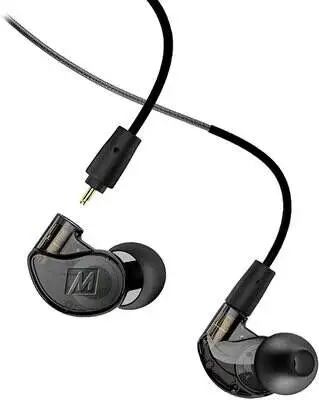
MEE audio M6 Pro (2nd Gen), an IEM often marketed to musicians but also used by gamers. It has a single dynamic driver in each ear and a secure over-ear hook design. In daily use, the M6 Pro feels very robust and practical. It comes with two cables (a straight and an L-shaped plug), both terminating in a 3.5mm jack. The clear, plastic housings and braided cable give it a rugged vibe, it’s built to survive some rough handling.
Sound-wise, the M6 Pro is fairly neutral but slightly on the bright side. It has a “moderately well-balanced audio response” but “may sound a bit too sharp” for some. In practice, I found the treble (highs) to be a bit accentuated. This helped me hear crisp details like gunfire and footsteps, but could get piercing at very high volumes.
For everyday use and gaming, I found them quite usable. They also isolate decently: I could hear my voice chat clearly over background noise as long as the seal was good. One downside: these have no built-in mic, so they function purely as earphones. Gamers who rely on headsets to chat will need a separate mic solution.
Moondrop CHU II
Good
REASONS TO BUY
✓ Phenomenal clarity and neutrality for the price.
✓ Low distortion.
✓ Comfortable (lightweight alloy shells)
REASONS TO AVOID
✗ Micophone is not that much good.
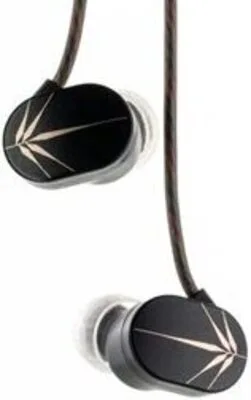
Finally, I tried the Moondrop CHU II, a budget IEM that’s been hyped in audiophile circles for its performance at a very low price. The CHU II has one 10mm dynamic driver per side, built with an aluminum-magnesium alloy diaphragm. Despite costing under $30, it boasts features like a durable metal cavity, CNC brass nozzles, and even replaceable acoustic filters. In use, what surprised me most was the sound accuracy.
The CHU II’s tuning is remarkably close to the ideal (Harman) curve. This means music and game audio sound very “right” without needing EQ.
I also noticed the CHU II feels quite light and comfortable. In gaming, their balanced sound made for an enjoyable experience: highs and mids were articulate, and bass was punchy enough to feel satisfying. The clarity is exceptional for any game audio; I could pick out details in soundtracks and hearing nuance in effects. Given their low impedance (18Ω) and high sensitivity (119dB), any device can drive them easily.
Conclusion:
Each of the above IEMs has something unique to offer. For ultra-competitive games, I tended to reach for the Blessing 3 or IE 600 for their razor-sharp imaging. For musical immersion and streaming, the Orchestra Lite or Aria 2 felt lush and engaging. Budget players will love how much sound the ZAX, ZS10 Pro, and CHU II pack into affordable packages. And if I’m active or commuting while gaming, the M6 Pro’s durability was unbeatable.
Ultimately, the best in-ear monitor depends on your priorities, sound signature, comfort, or price, but I’ve covered the top picks in each category. I hope this guide helps fellow gamers find the IEM that takes their game audio to the next level.