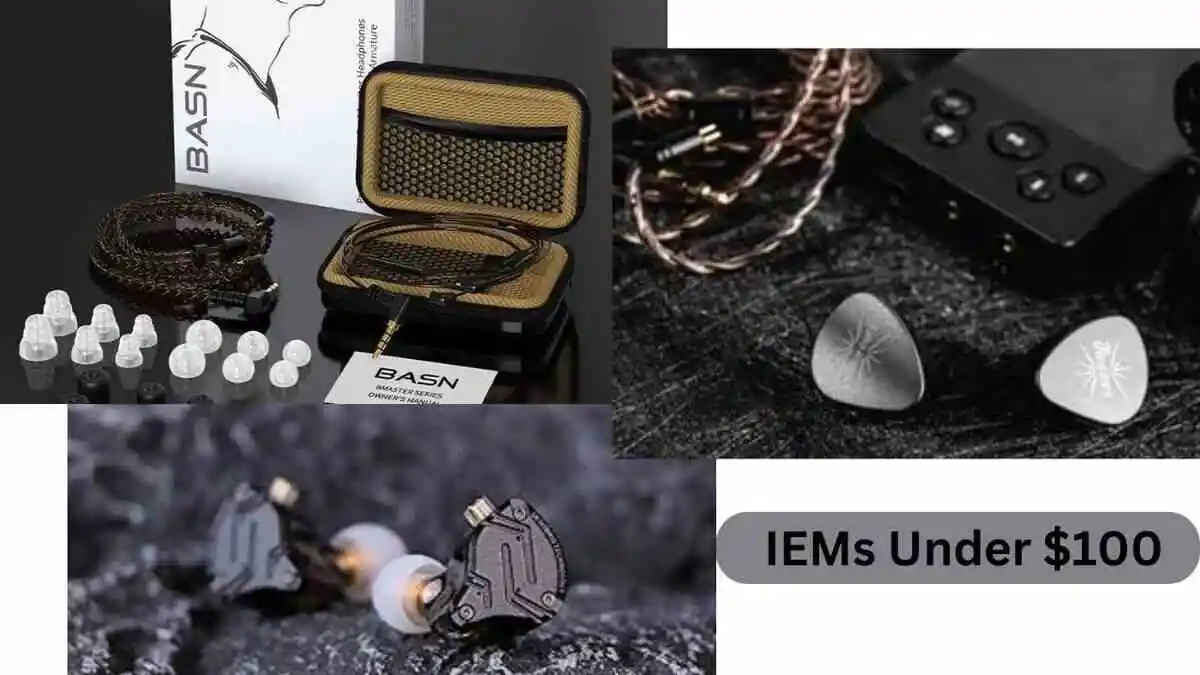
I remember when I first started playing gigs and streaming games, I was tired of cheap earbuds that muddied the sound and slipped out of my ears. I needed something better, deep bass heavy, professional audiophile in-ear monitors (IEMs) that are under 100 and provide all rounder critical listening.
After months of testing and tweaking, I’ve found some best IEM’s under $100 that deliver clarity, heavy bass, and comfort for hours on end. In this article I’ll share my personal experience and comprehensive reviews of the best budget IEMs for musicians and gamers. Whether you’re monitoring on stage or hunting footsteps in a game, there’s an affordable pair of best iem under 100 dollars for you.
Our Top 3 Recommendations
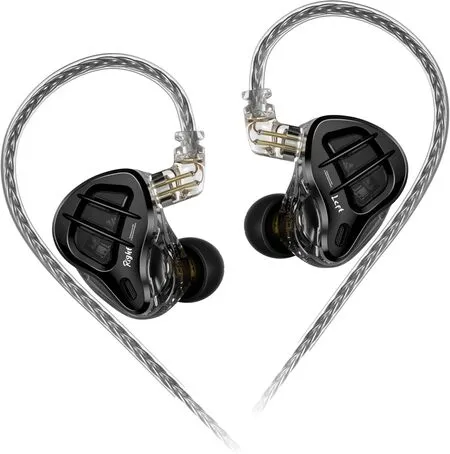 KZ ZAR in-Ear Monitor
Deep Heavy Bass.
Provide All Around Critical Listening.
Comfortable Fit.
Best In Ear Monitors Under $100
KZ ZAR in-Ear Monitor
Best Pro IEM
REASONS TO BUY
✓ Deep Heavy Bass.
✓ Provide All Around Critical Listening.
✓ Comfortable Fit.
✓ Strongest Isolation.
REASONS TO AVOID
✗ No Microphone Option.
The KZ ZAR is a high-performance in-ear monitor that delivers professional-level sound without a premium price tag. Its hybrid setup, with 7 balanced armature drivers and 1 dynamic driver, creates a full, engaging sound: sparkling highs, clear mids, and deep, punchy bass that hits with authority without overwhelming the mix. Whether you’re gaming, listening to music, or monitoring live audio, the bass gives tracks real weight, while instruments and vocals remain crisp and detailed.
Comfort is excellent, thanks to the ergonomic design and multiple silicone tips that provide a snug seal, blocking up to 36dB of outside noise. This lets you enjoy the full depth of the sound at lower volumes, reducing fatigue during long sessions. The lightweight aluminum shell keeps the IEMs secure and comfortable, while the durable 8-strand detachable cable ensures reliability and even allows for a future wireless setup with a Bluetooth adapter.
Overall, the KZ ZAR combines powerful bass, precise highs, and clear mids with excellent isolation, durability, and ergonomic comfort, making it a great choice for gamers, musicians, and serious listeners seeking immersive sound at a smart price.
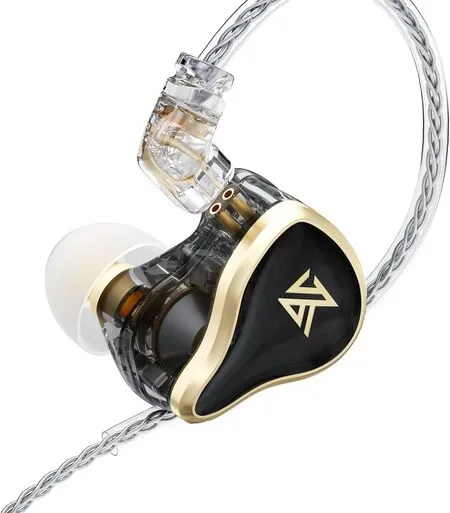
KZ ZAS In Ear Monitor
Best Hybrid IEM
REASONS TO BUY
✓ Deep Bass.
✓ Clear Mids.
✓ Crisp Highs.
✓ Durable Cable.
✓ Buying Options avaialable (With or Without Mic)
REASONS TO AVOID
✗ Bright Treble.
The KZ ZAS is a professional-grade hybrid IEM designed for musicians, audiophiles, and serious listeners who want precise, immersive sound. Its 7 balanced armature drivers combined with a 10mm dual magnetic moving coil deliver deep, dynamic bass, clear mids, and detailed highs with wide soundstage and excellent high-frequency extension. Vocals and instruments feel lifelike, while the transient response keeps fast passages sharp and energetic, making it ideal for both music monitoring and gaming.
Comfort and isolation are equally impressive. The ergonomic design, over-ear cable routing, and multiple silicone tips create a secure fit and block up to 36dB of noise, letting you focus on the sound without distractions. The compact aluminum shells are lightweight, and the high-definition 200-core silver-plated detachable cable is durable, upgradeable, and serviceable for long-term use.
The KZ ZAR focuses on punchy, engaging bass and wide spatial imaging, making it great for gaming and casual listening. The KZ ZAS, on the other hand, leans more toward precise monitoring and high-frequency detail, ideal for musicians and audiophiles seeking a natural, analytical sound.
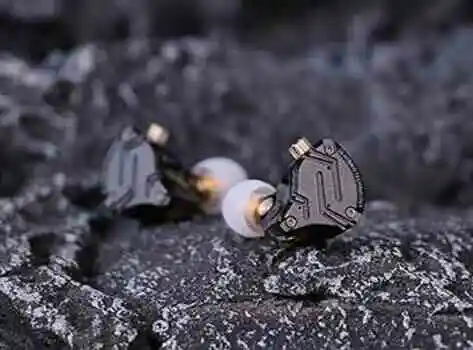
Linsoul KZ ZS10 Pro
Best For Professional Musician
REASONS TO BUY
✓ Punchy bass.
✓ Clear highs.
✓ Sturdy metal shell.
✓ Comfortable fit.
REASONS TO AVOID
✗ V-shaped sound may be too bright for some.
The Linsoul KZ ZS10 Pro is a hybrid 5-driver IEM (4 balanced armature + 1 dynamic) that’s become famous for its big sound on a budget. When I first tried them, I was struck by how detailed the treble was, cymbals shimmered and guitar strings rang out clearly.
The punchy 10mm dynamic driver delivers bass that hits hard, making drums and synths thump satisfyingly in my chest. You get a V-shaped sound: deep, tight bass and sparkling highs, with the mids slightly pushed back for a lively feel.
Design-wise, the ZS10 Pro has a stainless-steel faceplate (it looks very solid) and a detachable braided cable. I liked how sturdy it felt, something to rely on during studio sessions or long play. The over-ear, memory-wire cable design kept them from flopping around during movement, and the snug seal from the foam tips really isolates noise.
These IEMs are great for gaming, too: footsteps and effects stand out crisply so you will never miss directional cues.
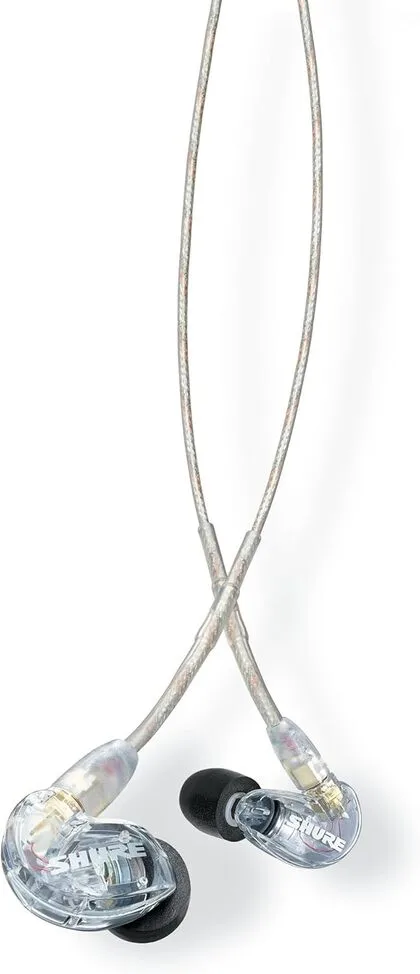
Shure SE215 PRO
Professional Sound-Isolating
REASONS TO BUY
✓ Warm mids.
✓ Smooth treble.
✓ Excellent isolation.
✓ Durable cable.
REASONS TO AVOID
✗ Single driver; highs less sparkly than hybrid models.
The Shure SE215 PRO is a classic choice for a reason: it’s built like a tank and delivers a clear, smooth sound with solid bass. I personally brought a pair to every gig for years. Its single dynamic driver is tuned for natural midrange and boosted bass.
It has “clear sound and deep bass” in a snug in-ear design. Indeed, I noticed that vocals and instruments came through with a warm, full tone. It isn’t as sparkly on top as a multi-driver IEM, but the overall profile is very musical.
These earphones are 100% built for stage and travel. They use Shure’s Sound Isolating design (the earbuds block out up to 37 dB of noise) which means road noise, crowd chatter, and amplifier rumble stay out.
The over-ear cable keeps things tight, and the included foam and silicone tips let you dial in a very secure fit. The cable itself is detachable (with MMCX connectors), so you can upgrade to a wireless adapter or replace a frayed wire, plus Shure includes a hard zippered case for safe storage.
SE215 PRO vs KZ ZS10 Pro
- SE215 PRO has a single dynamic driver, while KZ ZS10 Pro uses a hybrid 4BA+1DD.
- SE215 offers warmer mids and smoother treble, KZ is more V-shaped with emphasized highs and bass.
- SE215 has better noise isolation (~37 dB) than KZ.
- Build-wise, SE215 is more robust for stage use; KZ feels lighter with a metal faceplate but slightly less secure isolation.
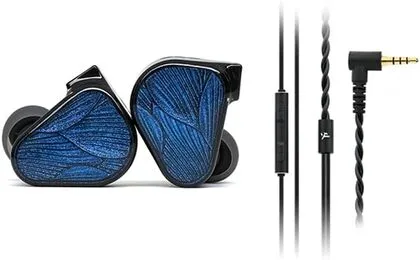
TRUTHEAR x Crinacle Zero
Best Audiophile IEM
REASONS TO BUY
✓ Clear mids.
✓ Punchy bass.
✓ Smooth treble.
✓ Versatile cables.
REASONS TO AVOID
✗ Needs bass adapter for stronger low end.
The Truthear x Crinacle Zero:BLUE2 is a unique collaboration IEM designed by the famous audio reviewer Crinacle. It’s a dual dynamic-driver model (10mm + 7.8mm) tuned to a modern “Harman” curve. I was excited to try it because audiophile forums rave about it. From the first listen, it struck me as very well balanced: there’s plenty of tight sub-bass that adds punch to electronic music, but the mids remain clear and not muffled.
Crinacle’s tuning legacy is evident, it’s familiar if you’ve heard his previous Zero:RED, but the Blue2 has slightly more refinement and a bit more bass. Like a “punchy and robust sub-bass” that stays controlled beacuse of included impedance adapter. In my tests, switching on the extra adapter brought a satisfying rumble to tracks like hip-hop, but even without it the sound is nicely balanced and versatile.
Beyond sound, the Zero: BLUE2 are solidly built. The shells are modest plastic but lightweight. The package even comes with two cables: one with an inline mic (great for phone use) and one longer “stage” cable without a mic. They include lots of tips too.
BLUE2 vs Shure SE215 PRO:
- Blue2 has dual dynamic drivers, giving more controlled bass and slightly more clarity in mids compared to SE215.
- Treble on Blue2 is smoother and less recessed than SE215’s warm profile.
- Blue2 includes a bass adapter and two cables, offering more versatility than SE215.
- Overall sound is slightly more neutral and modern-tuned compared to the warm SE215.
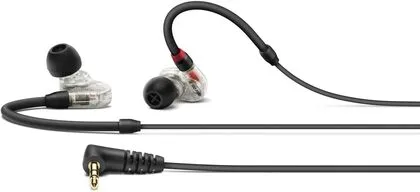
Sennheiser IE 100 PRO
Balanced for Musician & Gamers
REASONS TO BUY
✓ Neutral accurate sound.
✓ Slim fit.
✓ Great isolation.
REASONS TO AVOID
✗ Less bass impact than V-shaped models.
The Sennheiser IE 100 PRO is a professional-grade IEM aimed at musicians and engineers. Sennheiser describes it as using an “innovative, dynamic 10-mm broadband transducer for powerful, precise monitoring". In practice, I found it lives up to that: the sound is punchy yet accurate.
Compared to many budget IEMs, it’s very neutral, the bass is tight but not overemphasized, and the mids and highs are very smooth. Sennheiser promises “distortion-free, full-spectrum sound with punchy lows, detailed mids, and silky highs", and that’s exactly the vibe. When I plugged them in, guitar notes and piano keys all had a natural, uncolored tone, which I appreciated during my jam sessions.
Physically, the IE 100 PRO is slim and lightweight. It has an over-ear cable and includes both foam and silicone tips for a snug seal. The build is clearly rugged: the cable has a cloth sheathing and looks like it could survive plenty of stage action.
Sennheiser IE 100 PRO vs TRUTHEAR BLUE2
- IE 100 PRO uses a single dynamic driver tuned for accuracy, unlike Blue2’s dual-dynamic setup.
- Sennheiser is more neutral and flat, Blue2 has mild bass emphasis.
- IE 100 PRO has slimmer, stage-ready design, Blue2 is bulkier with two cables and bass adapter.
- Isolation and fit on IE 100 PRO feel tighter for professional monitoring, while Blue2 is more versatile for casual use.
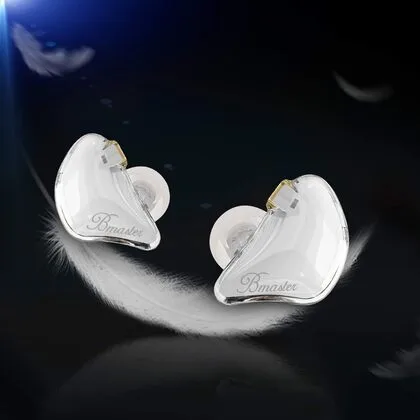
BASN BMaster Triple Drivers
Professional Hybrid IEM
REASONS TO BUY
✓ Full punchy sound.
✓ Wide soundstage.
✓ Dual cables included.
REASONS TO AVOID
✗ Neutral tuning may feel less bass-heavy.
The BASN BMaster Triple Drivers are a true hybrid workhorse. They pack two dynamic drivers and one balanced armature per side, aiming to give you the best of both worlds. In my experience, this means they deliver solid low-end impact from the dual 9mm dynamics, while the BA driver handles crisp highs. The resulting sound feels musical and warm: drums and bass guitars hit hard, and vocals are clear with lush mids.
The BMaster’s tuning is advertised as “neutral and balanced” with “punchy lows, luscious mids, and silky treble”, and I have to agree that it’s a very versatile signature. When I tested them, genres from rock to jazz all sounded natural and engaging. I also noticed a surprisingly “spacious and detailed soundstage” (as BASN puts it) which is unusual at this price, it didn’t feel cramped at all in my ears.
Comfort is also a strong point: these IEMs come with memory-foam tips that seal tightly and isolate noise. I used them for both bass guitar practice and home listening, and they did not fatigue my ears over long sessions. Given their detailed yet balanced tuning, they’re perfect for both mixing onstage and enjoying hi-fi music.
BASN BMaster Triple Drivers vs Sennheiser IE 100 PRO
- BMaster uses hybrid 2DD+1BA drivers, offering more punch and extended highs than IE 100 PRO’s single dynamic driver.
- Sound is warmer and more musical on BMaster, Sennheiser is precise and flat.
- BMaster comes with two high-quality cables versus one standard cable on IE 100 PRO.
- Isolation is slightly less tight on BMaster but still good; comfort is comparable.
CCA/KZ AS16 Pro
Balanced-Armature Audiophile IEM
REASONS TO BUY
✓ Ultra-detailed Sound.
✓ Wide soundstage.
✓ Flat and very accurate tuning.
REASONS TO AVOID
✗ Bright treble can be fatiguing.
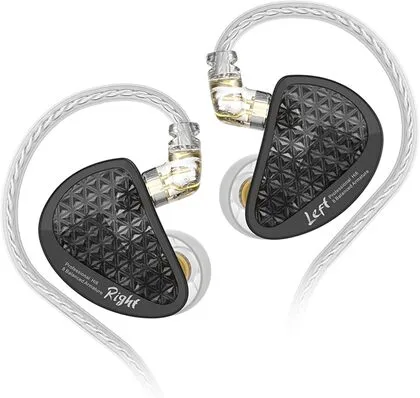
The CCA (KZ) AS16 PRO is a jaw-dropping spec sheet: 16 balanced armature drivers (8 per ear) designed to cover all frequency bands. These drivers are arranged in a multi-channel acoustic structure for ultimate clarity. When I tried the AS16 Pro, the first thing I noticed was astonishing detail, I could pick out tiny background vocals and subtle reverb tails.
According to the official description, the AS16 Pro uses custom BA drivers with “strong resolving power” for highs and “excellent resolution and clarity” in the mids. That technical detail shows: every instrument in a mix stands out clearly. The bass is surprisingly solid for an all-BA design (one custom 22955 BA handles the lows), it’s firm and clean, if not as thumping as a dynamic driver. Overall, these feel like studio monitors in your ears: neutral, expansive, and absolutely transparent once you get a good seal.
Of course, with great detail comes some quirks. In my personal experience, the AS16 Pro can sound a bit bright at first. High-hats and vocals are very forward, so they may be a bit energetic for ears that prefer a softer top end. Also, these IEMs benefit from a bit of burn-in, and they sound best with a high-quality music source.
CCA KZ AS16 PRO vs BASN BMaster:
- AS16 PRO uses 16 balanced armature drivers, far more than BMaster’s hybrid triple setup.
- Sound is extremely detailed and transparent on AS16 PRO, whereas BMaster is warmer and more musical.
- AS16 PRO is slightly brighter and can be fatiguing, BMaster is smooth and easy on the ears.
- Build is lighter on AS16 PRO, while BMaster feels sturdier with metal-like finish.
BASN MMCX Triple Driver
Bass-Rich IEM
REASONS TO BUY
✓ Deep Bass.
✓ Comfortable.
✓ Dual cables.
✓ Eye-catching design.
REASONS TO AVOID
✗ Bass-forward tuning may overshadow mids.
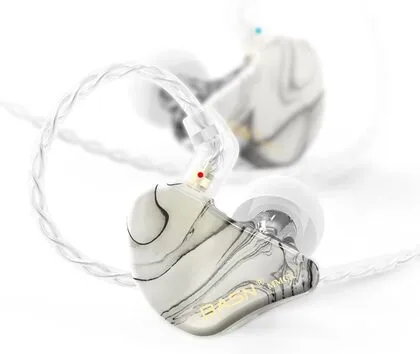
The BASN MMCX Triple Driver (in elegant porcelain white) is a bass-forward in-ear monitor that still offers clarity. Like the BMaster above, it’s a 3-driver hybrid (2 dynamics + 1 BA), but in this case it specifically emphasizes “rich bass” in its marketing. When I put them on, the first thing I noticed was how solid and deep the low end is.
Electronic music and hip-hop come alive with booming bass, yet the mids don’t completely disappear, vocals are present and highs don’t completely roll off. The tuning is a bit warmer than the BMaster, leaning toward an entertaining, enjoyable sound signature. Construction is good: these IEMs come with MMCX connectors (hence the name) and include two cables as well, one mic cable and one extra-long stage cable.
In my use, the cables felt sturdy and I liked having a dedicated stage cable for practice without the mic weight. The appearance (porcelain white shell with a touch of pattern) is also eye-catching. For the price, they offer a lot of value: nice accessory set (including 6.3mm adapter and carry case) and a sound tuning that will satisfy bass enthusiasts and gamers looking for immersion.
BASN MMCX Triple Driver vs CCA KZ AS16 PRO
- MMCX Triple Driver emphasizes bass, while AS16 PRO is more neutral and detailed.
- MMCX uses 2DD+1BA hybrid drivers, AS16 has 16 BA drivers.
- MMCX is slightly more fun and immersive for gaming, AS16 is analytical and for critical listening.
- Build and accessories are comparable, but MMCX has a more visually striking design.
Conclusion:
After trying all these budget-friendly IEMs, I can say confidently that you don’t have to spend hundreds to get great sound. Each of the above picks of best iem under 100 excels in its own niche. For bass KZ ZAR and KZ Zas are great options and for gaming, the KZ ZS10 Pro and BASN MMCX Triple deliver muscle and excitement. For professional music monitoring, the KZ ZS10 Pro, Sennheiser IE 100 PRO and BASN BMaster offer clarity and balanced accuracy.
If you want a bit of everything, the versatile Truthear BLUE2 and AS16 PRO give you deep lows and sparkling detail, perfect if you love audiophile-grade sound on a budget. And the Shure SE215 PRO stands as a rock-solid all-rounder with its reliable isolation and warm sound.